
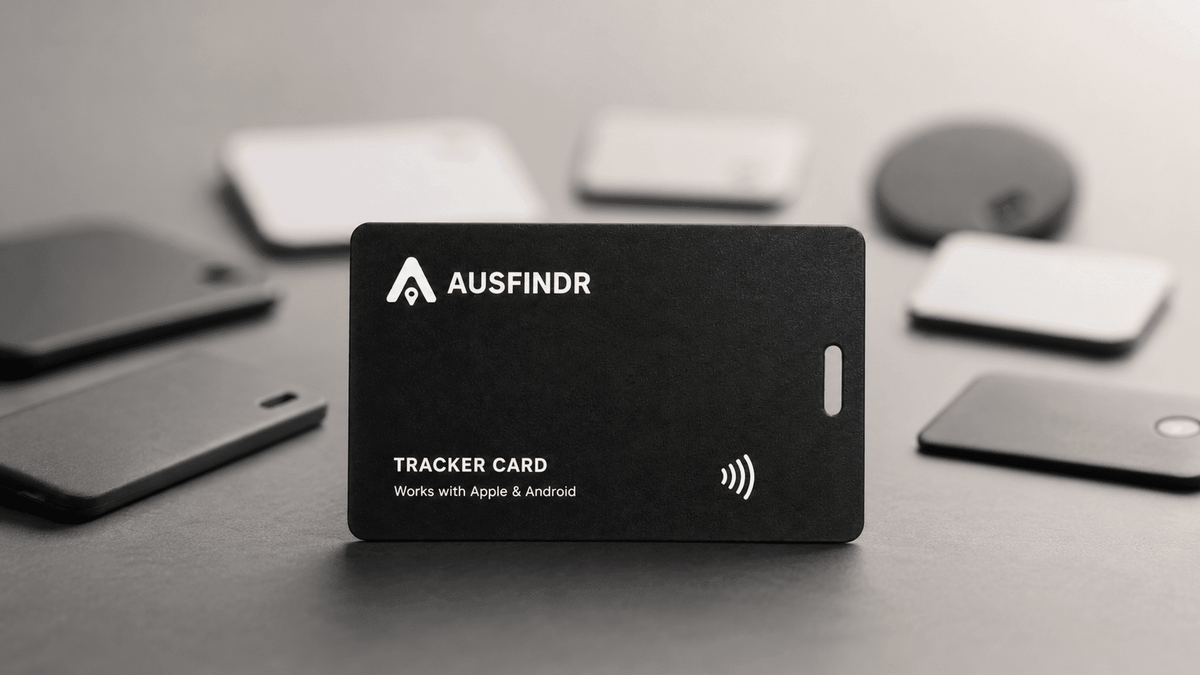
Tracker cards are a simple way to keep track of everyday items such as wallets, luggage, bags, cars, keys and other essentials. But with so many options available, it can be hard to know which one is right for you.
The best tracker card is usually the one that fits your item properly, works with your phone, is easy to set up, and does not add unnecessary ongoing costs or complicated apps.
A good tracker card should feel simple from the start. It should be slim enough for everyday use, reliable enough to give you confidence, and backed by clear instructions and support if you need help.
Key things to check before you buy
When comparing tracker cards, there are a few things worth checking before you buy:
- Phone compatibility — does it work with Apple, Android or both?
- Size and thickness — will it actually fit in your wallet or bag?
- Battery type — is it rechargeable, replaceable or disposable?
- Water resistance — can it handle everyday use, travel and the occasional splash?
- Support — is there someone local you can contact if you need help?
- Quality control — is the product tested before it is sent out?
- Ongoing fees — does it require a subscription or a separate tracking app?
These points matter because many tracker cards look similar online, but the experience can be quite different once you start using them.
Tracker card vs AirTag
Apple AirTags are popular and work well for many uses, but they are not always the best choice for wallets or slim everyday carry. A tracker card is usually a better fit when you want something flat, discreet and easy to slide into a wallet, passport holder, laptop bag or luggage pocket.
Compared with an AirTag, a tracker card can be a better choice because:
- Rechargeable battery — a rechargeable tracker card can be topped up wirelessly, so you do not need to replace a separate coin battery.
- Slimmer and less bulky — a card-shaped tracker is much easier to fit into wallets, bags and flat compartments.
- Water-resistant for everyday use — a water-resistant tracker card is better suited to travel, bags and everyday items that may be exposed to moisture.
- More discreet — a slim black card can be placed inside a wallet, luggage pocket, car compartment or bag without drawing attention.
AirTags are still a good product, especially for keyrings or items where the round shape does not matter. But for wallets and flat storage spaces, a tracker card is often the more practical option.
Tracker card vs Life360
Life360 is a useful option for family location sharing and checking where someone’s phone is. However, it is designed more for people and phones, rather than slim everyday items such as wallets, luggage, bags or cars.
Compared with Life360, a tracker card can be a better choice because:
- No separate app required — AusFindr works with Apple Find My or Google Find Hub.
- No subscription fees — there are no ongoing monthly costs to use the card.
- Not locked to proprietary trackers — you can use the built-in tracking network on your phone.
- Bigger tracking network — AusFindr uses the two major crowdsourced networks from Apple and Google, while Life360 coverage relies on devices using the Life360 network.
Life360 is a good option for sharing phone locations with family. But for tracking a wallet, bag, piece of luggage or everyday item, a tracker card is usually the simpler choice.
What about generic tracker cards?
There are many generic tracker cards available online, and some of them can work well. The main issue is that it can be hard to know what you are getting. Different factories and sellers may use similar-looking products, but the setup process, battery quality, instructions and support can vary.
Common issues with generic tracker cards include unclear instructions, limited support, inconsistent quality control, and uncertainty around whether the product will work properly with your phone.
This is where buying from a local Australian business can make a difference. Clear setup guides, local stock, phone and email support, and warranty support all matter if you run into an issue.
Why quality control matters
Tracker cards are small electronic devices, so testing is important. Every card we ship is checked before sending to ensure it works as expected before it reaches the customer.
This includes checking key functions such as powering on, pairing, sound and charging. It helps reduce avoidable issues and gives customers more confidence that the card is ready to use when it arrives.
No electronic product is completely free from setup issues, especially when Bluetooth, phone settings and Apple or Google accounts are involved. But proper testing, clear instructions and local support make the process much easier.
So, what is the best tracker card in Australia?
For most people, the best tracker card is one that is slim, rechargeable, water-resistant, easy to set up, and locally supported.
AusFindr is designed as a simple everyday tracker card for Australians. It works with both Apple Find My and Google Find Hub, so it is a good option if you want a single card that works with both Apple and Android. It is rechargeable, water-resistant, slim enough to fit in wallets and bags, and does not require a subscription.
What if I only need Apple or Android?
AusFindr is designed as a dual-network tracker card, meaning it can work with Apple Find My and Google Find Hub. However, some customers may prefer a dedicated card for a single platform.
SecurityBase, the team behind AusFindr, also offers dedicated tracker cards for Apple and Android. These are not sold on the AusFindr website, but they can be a great option if you specifically want an iOS-only or Android-only tracker card.


